
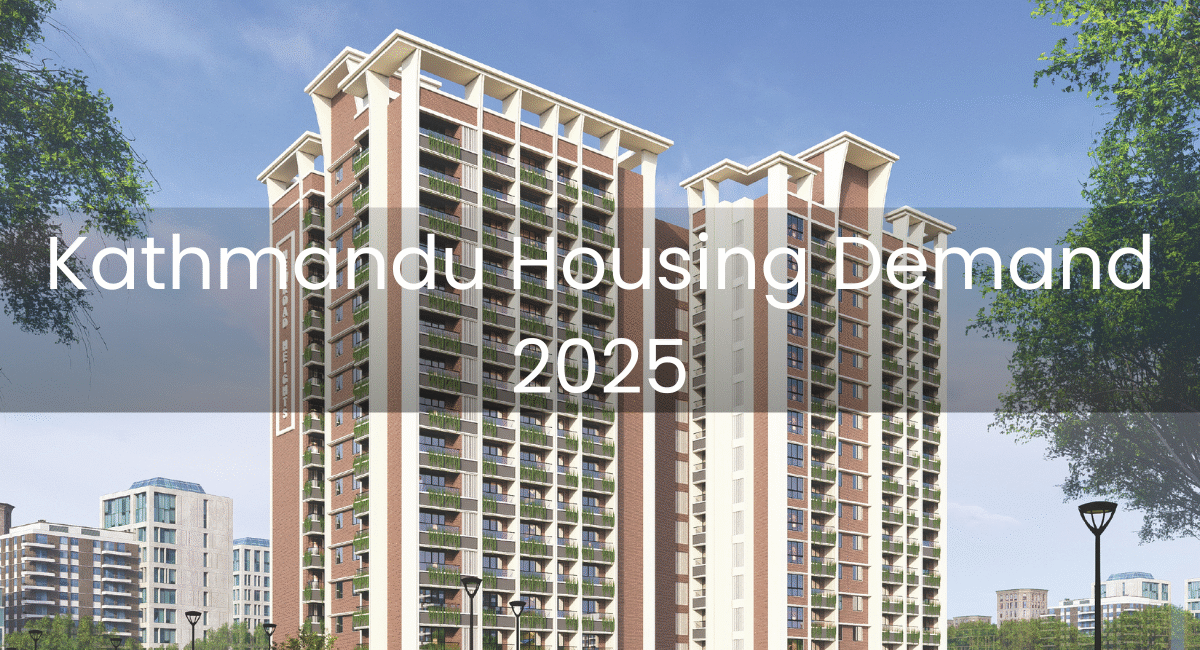
Kathmandu housing demand 2025: why demand remains strong despite affordability pressures — data, rental yields, supply gaps, and why Newroad Heights is a top central-Kathmandu pick.
Kathmandu housing demand sits at the intersection of rapid urbanization, constrained land supply, and changing investment behaviour.
Homebuyers, renters, and investors are asking the same question: is demand still growing, where are prices headed, and which property types give the best return?
This article answers those questions using Nepal-specific data, industry reports, and market evidence.
Macro Drivers of Kathmandu Housing Demand in 2025
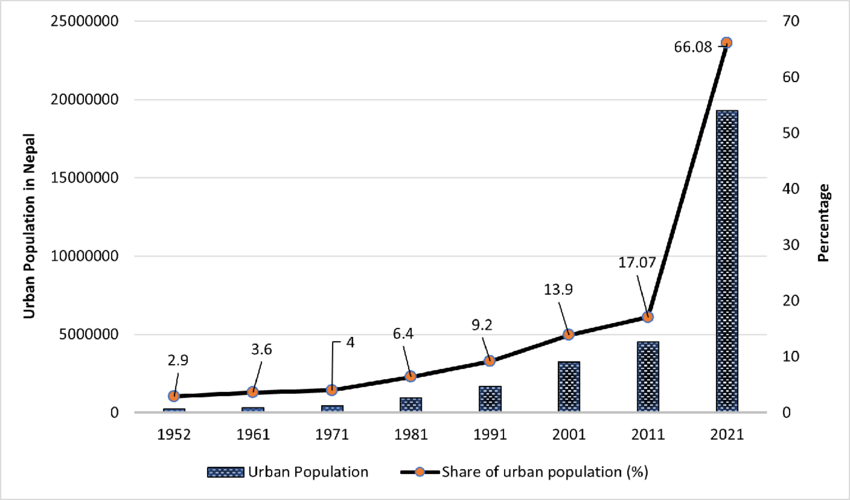
1. Urbanization and Population Growth
Kathmandu’s population has grown substantially in recent decades. Urbanization in Nepal continues (annual urban growth rates around 2–3% recently), pushing demand for housing in the Kathmandu Valley, both for owner-occupiers and renters.
This urban inflow is driven by job concentration (government, services, NGOs), education, and internal migration.
2. Demographics and Household Formation
Nepal’s younger population and rising single/ nuclear households increase demand for smaller housing units (1–2 bedroom apartments).
Students, young professionals, and returning NRNs (non-resident Nepalis) prefer apartments close to employment and transport hubs.
3. Investment Demand and Capital Preservation
Real estate in Kathmandu remains a popular store of value for Nepalis both local buyers and NRNs, due to limited alternative investment vehicles, cultural preference for property, and capital accumulation in land.
This drives persistent demand for central locations even when price growth slows. Industry reports and market guides for 2025 still point to investor interest in Kathmandu apartments.
Supply-Side Realities: Kathmandu Housing Demand
Even as demand continues to rise, Kathmandu’s housing supply remains constrained due to multiple structural and economic challenges.
1. Limited and Expensive Land in the Core
Central Kathmandu is already heavily built-up, leaving very few developable plots. The remaining land is owned in small, fragmented parcels, making acquisition complicated and cost per square foot extremely high.
Because land prices form a big portion of total housing cost, developers can’t profitably build affordable housing in the center.
Result: New supply comes in lower quantity and at higher prices.
2. Regulatory Delays and Planning Complexity
Developers often face long processes involving:
- zoning approvals
- land-use conversion
- building permits
- compliance with seismic regulation
These delays increase project risk and make developers more cautious, slowing down supply growth.
3. Rising Construction Costs
Costs of cement, steel, labor, finishing materials have surged in recent years. Earthquake-resilience standards also add cost necessary, but expensive.
Developers therefore target luxury and premium projects where margins are higher, instead of affordable housing. This creates a supply mismatch: high-end units available, but affordable units lacking.
4. Infrastructure and Location Barriers
Many outer areas still lack:
- reliable water supply
- quality road networks
- schools and hospitals
- drainage and utilities
So although land is cheaper outside the core, developers hesitate to launch projects where infrastructure is weak and sales may be slower.
5. Slower Pace of Deliveries
Even when projects launch, completion can take longer than planned — due to financing difficulties, import dependency for materials, and unexpected regulatory changes.
This delays the number of new homes entering the market each year.
What this means for the Housing Market in 2025
First-time buyers face affordability challenges as mid-market options remain limited. Central Kathmandu will stay expensive due to scarcity of supply.
New supply will continue spreading toward Ring Road and outskirts, but demand will remain concentrated in the core.
Rental and resale values in prime areas will stay strong because supply can’t quickly expand to meet demand.
Prices, Trends & Affordability (Evidence from 2024–2025)
1. Price levels and recent movement
Market surveys and localized price guides in 2025 show central Kathmandu apartment prices remain among the highest in Nepal (examples: ring-road/central areas often quoted in crores of NPR for modern apartments).
Analysts note sustained price appreciation over prior years, though some industry commentary in 2025 flagged short-term cooling in parts of the market.
2. Affordability pressures
Rapid price increases combined with wage growth that lags property inflation have put homeownership out of reach for many first-time buyers.
This has increased renting demand and fuelled the market for smaller, more affordable units and shared-housing options.
Rental Market & Yields — What Investors Need to Know
1. Typical Yields and Where They Come From
Recent local listings and investor guides estimate gross rental yields in Kathmandu for well-located apartments typically in the 4–8% range, depending on unit size, location, and whether the property targets long-term tenants or short-term/STR (short-term rental) guests.
Prime central locations with consistent tenant demand command better yields and lower vacancy.
2. Demand Segments for Rentals
- Young professionals (office/IT/NGO sectors) — stable long-term tenancy.
- Students and interns — demand for shared flats near universities.
- Tourists & short-stay visitors — supports STRs and serviced apartments in key micro-locations (though STRs are niche and can be seasonally variable).
Risk Factors & Market Headwinds
1. Economic Uncertainty & Sentiment
By 2025 some commentary indicated weaker consumer confidence and slowdowns in construction activity, which can soften demand temporarily and increase price volatility. Investors should weigh macro risk and liquidity horizon before buying.
2. Regulation & taxation
Policy shifts affecting foreign ownership, property taxation, or rental regulation could materially impact returns. In the context of the Kathmandu housing market, regulation and taxation play a pivotal role in shaping the supply-demand balance.
Local zoning laws, land-use conversion rules, building permit processes, and seismic-safety compliance requirements all add cost and delay to new developments, thereby constraining supply.
Taxes such as property tax, stamp duty, and transfer fees along with NRN ownership rules directly influence investor decisions and the overall cost of buying or renting.
These regulatory and tax constraints also slow down new housing development and reduce market flexibility, meaning supply often struggles to keep up with rising demand.
3. Liquidity & Exit Risk
Nepal’s property market can be less liquid than developed markets selling quickly at expected prices can be hard in down cycles.
Location, developer reputation, and product type significantly affect resale velocity.
Where Demand is Concentrated in Kathmandu (Micro-Location Trends)
- Central Kathmandu (New Road, Thamel fringe, nearby): High price, strong capital-appreciation potential, steady rental demand from service sector and NRNs.
- Ring-road suburbs (Kankeshwori, Balkhu, etc.): Development growth, more supply; attractive for mid-market buyers.
- Lalitpur & Patan areas: Demand for higher-quality residential living, access to schools and amenities.
Local market studies and price guides for 2025 show clear premiums for central addresses and better rental prospects in transit-connected areas.
Practical Takeaways for Different Investors
1. For Homebuyers
- If you need proximity to work/education, expect to pay a premium for central Kathmandu. Consider targeted financing and evaluate smaller units (1–2 BHK) for affordability.
- Check developer reputation and earthquake-resilient construction standards.
2. For buy-to-let investors
- Focus on micro-locations with steady tenancy drivers (offices, universities, hospitals). Expect ~4–7% gross yields in most good central locations; net yields will be lower after maintenance and taxes.
3. For developers
- Demand exists for compact, high-quality rental apartments and for affordable starter units. Product that matches demographic and budget realities will be absorbed faster.
Structural factors rising urban population, land scarcity in the core, cultural preference for property underpin sustained medium-term demand for Kathmandu housing.
However, short-term headwinds (economic sentiment, higher borrowing costs if they occur, regulatory shifts) can reduce transaction volumes and slow price growth. In other words: demand remains real, especially for well-located apartments, but timing, product fit, and liquidity risk matter.
Why Newroad Heights is a Standout Choice for Buyers & Investors
Newroad Heights offers central location, investment attributes that matter;
- Location premium: Newroad Heights is located in the centre of Kathmandu (Kankeshwori / New Road area), giving residents immediate access to major commercial, cultural and transport nodes, an important driver of both rental demand and capital appreciation. Central addresses retain demand even in softer market periods.
- Designed for rental & owner markets: The project offers apartment sizes and finishes that suit both young professionals and NRN investors seeking capital preservation and rental income. Independent investor guides that model returns for similar central projects show realistic yields for well-managed apartments.
- Projected ROI & capital-growth profile: Developer data and project analyses for Newroad Heights highlight competitive rental figures and multi-year capital-growth estimates (project literature shows projected rental yields and estimated 5-year capital growth in line with central-Kathmandu performance). While past performance is not a guarantee, the combination of central location and managed amenities supports both rental demand and resale potential.
- Practical advantages: Being in the city centre reduces commute times for tenants, increases appeal for short-term corporate tenants, and positions the property to benefit from any future infrastructure improvements prioritized for central Kathmandu.
Therefore, for buyers who prioritize centrality, steady rental demand, and capital-growth potential, Newroad Heights is a pragmatic choice among Kathmandu projects provided investors perform the normal due diligence (title checks, payment schedule, developer track record, and legal compliance).
Conclusion
Kathmandu housing demand 2025 is anchored by urban growth and land scarcity. Prices remain high in central areas, rental yields are attractive for well-located apartments, and investor interest continues especially for projects that match demographic trends (smaller units, good amenities, resilient construction).
If you’re an investor or buyer targeting Kathmandu, prioritize location, product-market fit, developer reputation, and a clear exit plan.
Ready to secure your spot in Kathmandu’s most in-demand location?
📞 Book a free site visit today
🏠 Discover available units and investment plans
📈 Own where value grows the fastest
👉 Newroad Heights: Inspired by History, Designed for Today
Read More: Resale Value of Apartments in Kathmandu: Why Newroad Heights Stands Out