
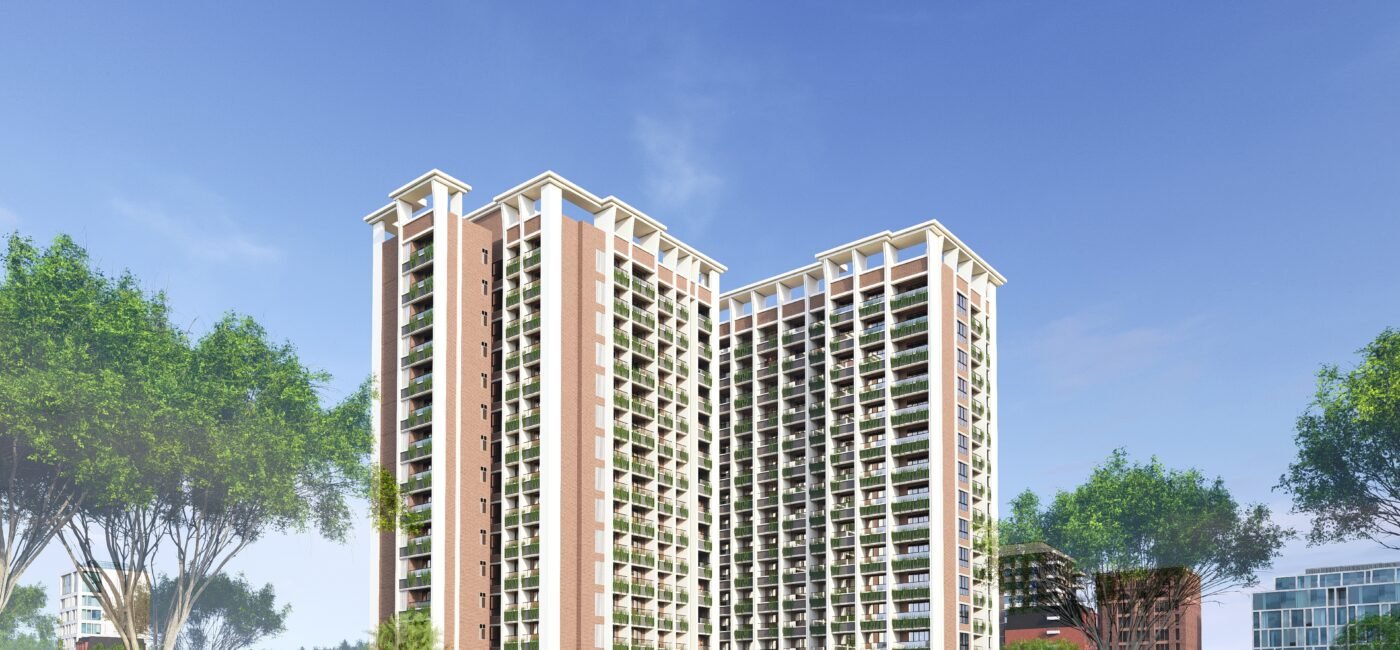
Making a choice between owning vs renting an apartment is one of the biggest financial and lifestyle choices many Nepalis face. This guide unpacks the pros and cons, the numbers, and the local context (Kathmandu and other urban centres) so you can make a clear, practical decision.
Quick takeaways
- Owning builds equity and long-term wealth, and often outperforms renting financially over long holding periods, but it requires a down payment, mortgage commitments, and responsibility for maintenance.
- Renting gives flexibility, lower upfront cost, and freedom from repairs, but monthly rent is a pure expense and doesn’t create property equity. Prop Nepal
- In Nepal’s major cities, factors pushing ownership include rapid urbanization, rising land values, and limited central inventory; however, mortgage costs and personal liquidity matter more than ever.
Why Nepal’s Housing Market Context Matters
Nepal is urbanizing quickly and cities like Kathmandu have experienced strong demand for centrally located housing, driven by jobs, services, and limited land supply. Urbanization amplifies both the benefit of owning (capital appreciation, rental demand) and the risk (higher purchase prices, competition for central units). The World Bank and Nepal’s urban studies have repeatedly shown that sustained urban growth raises demand for housing in core city areas.
At the same time, mortgage markets and interest rates in Nepal influence affordability. Mortgage credit interest levels and bank lending rates have been moving; recent series show mortgage rates falling into single digits in 2024–2025, making loans more accessible if your income and credit qualify. Still, financing costs are a core input when comparing owning vs renting.
The Decision Framework: Owning Vs Renting
Use these four lenses to evaluate owning vs renting:
- Cashflow & affordability — down payment, EMIs, maintenance, taxes vs monthly rent.
- Time horizon — how long you expect to stay (short-term renters vs long-term owners).
- Risk tolerance — exposure to price drops, repair bills, and interest-rate changes.
- Lifestyle priorities — mobility, freedom to renovate, and need for stability.
If you score high on long-term horizon and building wealth, owning tends to win. If you value mobility and low immediate cost, renting is usually better.
The Numbers: Owning Vs Renting an Apartment in Nepal
Below is a simplified comparison for Kathmandu using plausible local numbers. Replace these with exact quotes for your case.
| Item | Owning (per month equivalent) | Renting (per month) |
|---|---|---|
| Purchase price (2BHK central) | NPR 12,000,000 (one-time) | — |
| Down payment (30%) | NPR 3,600,000 (one-time) | — |
| Mortgage (70% @ 9% over 20 yrs) — EMI | NPR ~82,000 / month | — |
| Maintenance & taxes (estimate) | NPR 8,000 / month | Often included or lower |
| Net monthly cost (owner) | NPR ~90,000 / month | — |
| Typical rent for similar unit (central Kathmandu) | — | NPR 45,000–70,000 / month |
Interpretation: Owning can be cash-heavy up front and may cost more monthly if you include mortgage payments. However, ownership converts some of that payment into equity and gains if the property appreciates over time.
In Kathmandu, central properties have historically shown healthy appreciation (local market sources report double-digit land value growth in many central pockets over the last decade), though past performance is not a guarantee of future returns. Karyabinayak Homes
Benefits of Owning an Apartment in Nepal
1. Wealth Building & Long-Term Security
Owning an apartment in Nepal is more than just having a roof over your head it’s a powerful way to build long-term financial security. Each EMI you pay is not “lost” like rent; it reduces your loan and increases your ownership share.
Over time, this acts like a forced savings plan, which builds equity automatically. For many Nepali households, real estate is the single largest and most secure form of wealth transfer to future generations.
In fact, academic studies suggest that homeowners, on average, have much higher net worth compared to lifelong renters, largely because of this equity accumulation.
2. Capital Appreciation in Growing Cities
Kathmandu, Pokhara, and other major cities are seeing fast-paced urban growth. Central areas like New Road, Lazimpat, and Thamel are already limited in land availability. As demand rises and supply remains restricted, apartment prices in central locations have shown consistent appreciation.
This means that buying today can translate into significant value gains 5, 10, or 20 years down the line. For families thinking long-term, ownership is not just about present comfort but also about capturing tomorrow’s value. In Nepal’s context, this capital growth often outpaces general inflation.
3. Rental Income Potential
Another benefit of ownership is the possibility of turning your property into a source of income. In Kathmandu, many apartment owners rent out their units to working professionals, expats, or NRNs on short or long-term leases.
Rental income can help you cover a big part of your EMI, or even generate positive monthly cash flow once the loan is cleared.
With the growth of online platforms like Airbnb and rising interest from tourists seeking homestays or serviced apartments, owners also have the option to explore flexible rental models.
4. Stability and Sense of Belonging
Owning a home creates emotional and social stability that renting can rarely match. When you own your apartment, you don’t have to worry about sudden rent hikes, landlord demands, or being asked to move out unexpectedly.
This sense of permanence allows families to set down roots, develop stronger ties with neighbors, and build a community around them. For children, it provides consistency in schooling and friendships. In Nepali culture, ownership also carries a strong sense of pride and social recognition, reinforcing family security and legacy.
5. Freedom to Customize and Renovate
When you rent, your ability to make changes is limited landlords may not allow structural changes, wall colors, or even minor upgrades. Ownership, on the other hand, gives you the freedom to design the space to your lifestyle.
Want to build a Puja Ghar, redesign the kitchen, or add a study corner for your kids? As an owner, these decisions are entirely yours. Over time, customization makes the property feel more like “home” rather than just a temporary stay.
6. Hedge Against Inflation
Real estate has historically been one of the best hedges against inflation worldwide, and Nepal is no different. While the value of money decreases over time due to inflation, property values and rental rates usually rise.
This protects owners’ purchasing power and ensures that housing costs remain stable in the long run compared to renters, who may face rising rents every year.
7. Legacy and Family Security
For most Nepalis, owning a home is also about family legacy. Apartments are assets that can be passed down to children, ensuring financial stability for future generations. Unlike vehicles or other depreciating assets, property often increases in value over time, making it one of the safest forms of inheritance.
Takeaway: Owning an apartment in Nepal provides a mix of financial, social, and cultural benefits from equity building and rental income to stability, customization, and legacy creation. While it does require a large upfront investment and financial discipline, the long-term gains usually outweigh the short-term sacrifices, especially in Nepal’s rapidly urbanizing cities.
Benefits of Renting an Apartment in Nepal
1. Flexibility and Mobility
One of the biggest advantages of renting is flexibility. If your job requires you to move frequently say between Kathmandu, Pokhara, or abroad — renting saves you the hassle of buying and then selling a property.
For students, young professionals, or families still deciding on their long-term base, renting provides the freedom to adapt to changing circumstances.
In Nepal, where job postings in banking, NGOs, or the government may transfer employees every few years, renting is often the most practical choice.
2. Lower Upfront Cost
Owning an apartment in Kathmandu requires a large down payment, usually 20–30% of the property price, which can easily run into millions of rupees. Renting, by contrast, only requires a one-to-three-month security deposit and the first month’s rent.
For young professionals, SMEs, or newly married couples, renting allows them to live in good neighborhoods without tying up all their savings. That liquidity can instead be invested in businesses, education, or other financial instruments.
3. No Maintenance Burden
In most cases, renters don’t need to worry about costly repairs or large maintenance fees. The responsibility for plumbing, electrical systems, or major renovations usually lies with the landlord.
In Nepal’s context, where older apartments may need seismic retrofitting or water supply upgrades, avoiding these unexpected expenses can save renters significant money. This predictability is especially valuable for families living on fixed budgets.
4. Access to Prime Locations Without Ownership Costs
Renting gives you the chance to live in highly desirable locations like central New Road, Lazimpat, or Jawalakhel without having to buy at steep market prices. You can enjoy the convenience of being near schools, offices, hospitals, and cultural hubs at a fraction of the ownership cost.
For example, a 2BHK in central Kathmandu might rent for NPR 50,000–70,000 per month, while owning the same property could cost more than NPR 1.5 to 2 crore upfront, plus EMI and maintenance. Renting provides access to lifestyle benefits without the financial strain of ownership.
5. Financial Flexibility and Opportunity Cost
Renting can actually allow you to invest your savings more profitably elsewhere. Instead of locking millions into a down payment, you could channel that money into a business venture, higher education abroad, or financial assets like mutual funds.
In fact, research shows that in certain periods, renters who invested their savings in higher-return assets sometimes outperformed owners in wealth growth. For entrepreneurs in Nepal, renting while focusing capital on their business can be a smarter financial strategy.
6. Freedom from Market Risk
Property markets are not always guaranteed to rise. Buying at the wrong time (such as during inflated market cycles) can expose owners to negative equity if prices fall. Renters, on the other hand, are shielded from property value fluctuations.
In Nepal, where land and apartment prices have risen sharply in recent years, some analysts worry about affordability and sustainability. For renters, the risk of property price stagnation or correction doesn’t matter; they can simply renew or relocate without losses.
7. Easier Lifestyle Transitions
Renting suits people going through life transitions such as students starting their career, young couples, or retirees who don’t want the stress of maintaining a property.
For NRNs (Non-Resident Nepalis) who live abroad but visit Nepal occasionally, renting is a low-stress solution compared to buying an apartment that might sit vacant most of the year.
8. Predictable Monthly Expenses
Rent payments are straightforward and predictable. While owners face variable costs like repairs, tax changes, or maintenance hikes, renters generally only deal with rent increases every year or two. This helps families budget more easily.
For example, instead of worrying about a sudden NPR 500,000 repair bill for structural upgrades, a renter knows exactly how much their monthly commitment is which reduces financial anxiety.
Takeaway: Renting in Nepal provides mobility, affordability, and simplicity. It’s particularly suitable for those in the early stages of their career, people with limited savings, or anyone who values flexibility over long-term commitment. While it doesn’t build equity, renting allows you to enjoy urban convenience and keep your money working in other ways.
Case studies & Evidence: Renting Vs Owning Apartment
When evaluating whether to rent or own an apartment, it’s essential to consider various financial metrics such as rental yield, return on investment (ROI), and capital appreciation. Here’s a comparative overview based on recent data:
Rental Yield in Kathmandu
- City Centre: Approximately 2.13% gross rental yield.
- Outside City Centre: Approximately 2.13% gross rental yield.
Note: Rental yields in Kathmandu are relatively low compared to global standards, indicating that rental income alone may not be a significant source of return.
Return on Investment (ROI)
- Annual Property Value Increase: Kathmandu’s real estate market has experienced an annual increase in house values of approximately 12% from 2017 to 2024.
- Rental Income Growth: Rental income has also grown at a rate of about 12% annually during the same period.
Considering both capital appreciation and rental income, investors have seen a combined annual ROI of around 24% over the past seven years.
Strategic Investment Areas
- High Rental Yield Locations: Areas like Sanepa have reported rental yields between 7% and 9%, driven by high demand from the expatriate community.
- Prime Investment Zones: Neighborhoods such as Baneshwor, Bhaisepati, Lazimpat, and Budhanilkantha are considered prime locations for property investment in 2025 due to their modern amenities and good infrastructure.
Example Investment Scenario
In Thamel, a popular tourist area, a 3-bedroom apartment (approximately 1,500 sq. ft.) purchased for NPR 2.5 crore in 2023 generates a monthly rental income of NPR 80,000–100,000. This equates to an annual rental yield of about 5–6%. Considering the property’s appreciation, the total ROI could be higher, with investors recovering their investment over 15–20 years while benefiting from property value increases.
Considerations
- Foreign Ownership Restrictions: Foreigners cannot directly own land in Nepal. However, they may invest through a Nepali business or jointly with a Nepali partner.
- Market Liquidity: The real estate market in Nepal is less liquid compared to other investment options, meaning it may take time to sell properties and realize gains.
Hidden costs to factor in (so you don’t get surprised)
Whether buying or renting, account for these expenses:
If owning:
- Stamp duty, registration & legal fees on purchase
- Maintenance, homeowners’ association or common area fees
- Periodic large repairs (roofing, façade, lift replacement)
- Property taxes and insurance
- Opportunity cost of down payment (could be invested elsewhere)
If renting:
- Security deposit (typically 1–3 months’ rent or more depending on landlord)
- Annual rent increases or abrupt eviction risk if landlord needs property
- Payment to move frequently (time, agent fees)
- Limited ability to personalize or renovate
Practical guide: When owning makes sense for you
- You plan to stay 5+ years in the same city or area. Real estate transaction costs and market cycles mean owning generally needs time to pay off.
- You have a stable income and can afford a 20–30% down payment without draining emergency savings.
- You want to build long-term wealth or generate rental income.
- You value stability, renovation freedom, and legacy transfer (family inheritance).
If these match you, ownership is likely the better route.
Practical guide: when renting is better
- Your job or family situation requires mobility (short-term postings, uncertain relocation).
- You lack a reliable down payment or prefer to invest savings elsewhere.
- You’re early in your career and income is expected to grow faster than housing prices — renting may be the more flexible option.
- You want to avoid maintenance responsibility and prefer predictable monthly costs.
How to evaluate a specific apartment deal (step-by-step)
- Calculate all monthly costs as an “apples-to-apples” number: EMI + maintenance + taxes vs rent + utilities + deposit amortized.
- Estimate appreciation scenarios (conservative 3% p.a., moderate 6% p.a., optimistic 10% p.a.) and see break-even holding horizon.
- Check rental demand in the micro-location (nearby schools, offices, transport), since this affects resale liquidity and rental income.
- Inspect legal clearances: land title, building approvals, and NBC compliance (seismic) — crucial in Nepal.
- Run sensitivity to interest rates: what happens to your monthly EMI if rates rise by 2%? Many Nepalese mortgages are linked to bank base rates.
Final Checklist: 10 Questions to Ask Before Deciding
- How long do I plan to stay in this city/location?
- Can I afford the down payment and monthly EMI comfortably?
- What are the total upfront costs (stamp duty, legal fees)?
- How much are expected monthly maintenance fees?
- What’s the realistic rental income if I lease the unit?
- How liquid is the local resale market?
- Has the building complied with NBC seismic and fire safety standards?
- What happens to my cash flow if interest rates rise by 2%?
- Would I be better off investing the down payment elsewhere? (compare expected returns)
- Do I need flexibility (rent) or stability & legacy (own)?
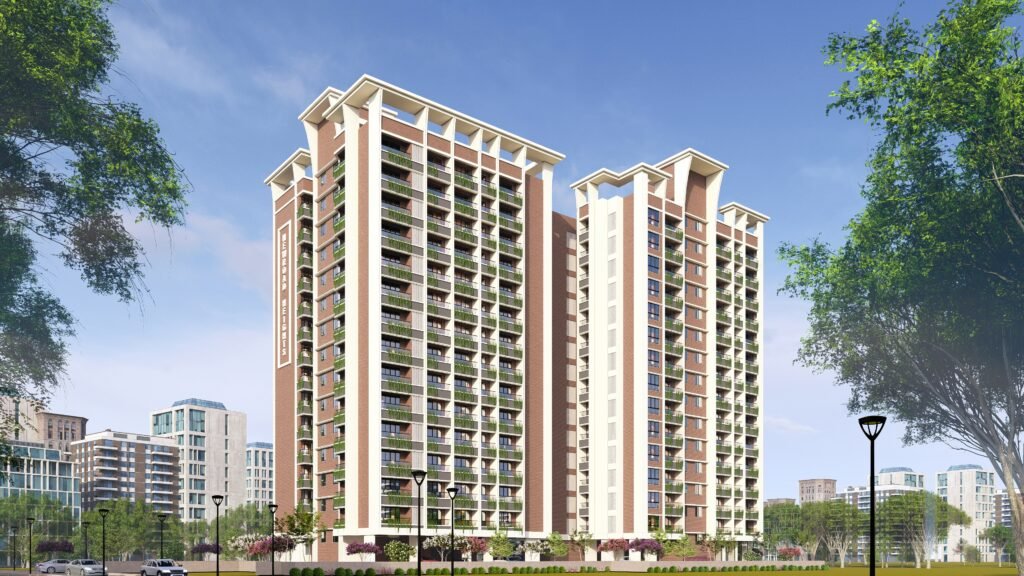
Why Newroad Heights Stands Out in Kathmandu’s Real Estate Market
In Kathmandu, finding a property that perfectly balances location, affordability, and modern living is no small feat. This is where Newroad Heights steps in, redefining urban living in the heart of the city.
Located in Kankeshwori, just 500 meters from Kathmandu Durbar Square, it offers residents a rare combination of cultural richness, convenience, and contemporary design.
What makes Newroad Heights truly remarkable is its ability to deliver value without compromise. Designed by the world-renowned architect Reza Kabul, this project merges elegance, practicality, and safety.
Its earthquake-resistant RCC structure, built according to NBC standards, along with efficient layouts, wide balconies, and abundant natural light, ensures residents enjoy a home designed for both today and the future.
Key Amenities That Redefine Urban Living
Newroad Heights isn’t just about owning an apartment, it’s about experiencing a lifestyle supported by premium facilities:
- 60% Open & Green Spaces: Landscaped gardens, podiums, and breathing spaces right in the heart of Kathmandu.
- EV-Ready Double Basement Parking: Convenient parking with direct lift access.
- Multipurpose Hall & Rooftop Yoga Zone: Ideal spaces for wellness, social gatherings, and community events.
- Three-Tier Security: CCTV surveillance, video door phones, and manned entry for total peace of mind.
- Fire Safety Systems & Smoke Detectors: Comprehensive fire protection across common areas.
- Rainwater Harvesting & Waste Management: Environmentally conscious, sustainable living.
- Wheelchair-Friendly Access: Inclusive design for residents of all ages and abilities.
Owning vs Renting: Why Newroad Heights Excels in Both
Why Owning at Newroad Heights is a Smart Choice
- Prime Location = Long-Term Value: Being near Kathmandu Durbar Square and New Road, your property is at the heart of commerce, culture, and tourism. This central location ensures strong capital appreciation over time.
- Equity & Financial Security: Buying here isn’t just about a home it’s an investment. Instead of paying rent that disappears every month, ownership builds long-term equity.
- Modern Amenities Without Extra Cost: Many apartments offer luxury but at a premium. At Newroad Heights, world-class facilities are included in the ownership, making it a cost-effective choice.
- Future-Ready Design: Earthquake-resistant construction, energy efficiency, and smart layouts mean your investment remains safe and functional for decades.
Why Renting at Newroad Heights Makes Perfect Sense
- Access Without Large Capital: Not everyone is ready to buy. Renting here allows residents to experience the benefits of a premium lifestyle without a huge upfront cost.
- Premium Lifestyle at Flexible Terms: From green spaces to EV-ready parking, tenants enjoy amenities usually reserved for owners perfect for working professionals, entrepreneurs, or families in transition.
- Location Convenience: Renters benefit from being minutes away from offices, schools, shopping, and heritage sites, minimizing daily commuting stress.
- Maintenance & Security Included: Renting here means tenants enjoy managed facilities and security systems, reducing hassle while maximizing comfort.
Why Newroad Heights Matters the Most
Newroad Heights isn’t just another apartment project in Kathmandu — it’s a game-changer for both homeowners and renters. Here’s why:
- Cultural & Commercial Advantage: Located near the city’s heritage hub, it offers a rare combination of urban convenience and cultural richness.
- Affordability Without Compromise: Unlike other developments where central location comes at a steep cost, Newroad Heights delivers world-class amenities at competitive prices.
- Inclusive, Future-Ready Living: With sustainable solutions like rainwater harvesting, wheelchair-friendly access, and earthquake-resistant construction, the project is built for all generations and lifestyles.
- Investment & Lifestyle in One Package: Whether buying or renting, residents gain comfort, convenience, and security, making it a choice that pays off both financially and experientially.
In short, Newroad Heights is more than a home it’s a lifestyle statement in the heart of Kathmandu, providing a rare opportunity to own, invest, or rent in one of the most sought-after locations of Nepal.
If your goal is long-term asset building, owning is better since the property value in Newroad is expected to appreciate, and the assured rent offsets some cost. But if your focus is on short-term cash flow and flexibility, renting might be wiser, as tying up 2.25 crore could limit other investment opportunities.
Conclusion: Choose What Matches Your Life, Not Status
There is no universal answer to owning vs renting apartment in Nepal. Ownership can be a powerful wealth tool, especially in growing urban markets like Kathmandu but it requires commitment, financial discipline, and a medium-to-long-term time horizon. Renting offers flexibility, lower upfront cost, and simplicity.
Ultimately, weigh hard numbers (EMIs, rent, maintenance) and soft factors (family stability, mobility, personal goals). If you want, I can plug in specific local prices, an EMI schedule, and rental comparables for your neighborhood to build a personalized owning vs renting model.
Read More: Discover Newroad Heights: Affordable 2BHK/3BHK Apartments in the Heart of Kathmandu